Live. Magazine
Travels in medicine
A city pastoral.

Space to be human
Martin Duerr's journey to becoming an industrial pastor was not sparked by a sudden realization but rather evolved through a prolonged process of exploration. He engaged in various pursuits, often trying new things before deciding to move on from them. His professional and personal experiences were shaped by a dialogue-based approach rooted in trial and error, reflecting his passion for meaningful conversations. This iterative process ultimately led him to his current role, where he combines his interests and skills to serve others in the industrial sector.
Text by Ann Weber, photos by Kostas Maros.
Then newly qualified as a theologian, one event shook Martin Duerr to the bone. He was enjoying all the new encounters and experiences in his position as pastor at a center for paraplegics. This was until he entered a room where his previous good mood suddenly left him.
Lying in bed there was a man born on the exact same day as him – September 3, 1959. Like Duerr, the man was 26 years old. But while Duerr was able to go about his job without a care in the world, the man was tied to the bed injured through no fault of his own and was in severe pain. At that moment, Duerr realized that this man could have been him – and that beautiful and terrible moments are sometimes closer together than he had previously thought.
Following a long professional career, it was these and many other experiences that led Martin Duerr to the office of industrial pastor – a profession that is globally unique and in which he worked for many years in Basel. Duerr appreciates the path that brought him to this position: “A lot of things in my life have grown and developed organically in a beautiful way.” All this took time.
No religious roots
Duerr grew up in a merchant family in Riehen in the early 1960s. Apart from church membership, Sunday school and prayers before meals, Duerr cannot recall many religious aspects in his upbringing: “My family never had much of a connection to the church.”
Duerr as a toddler.
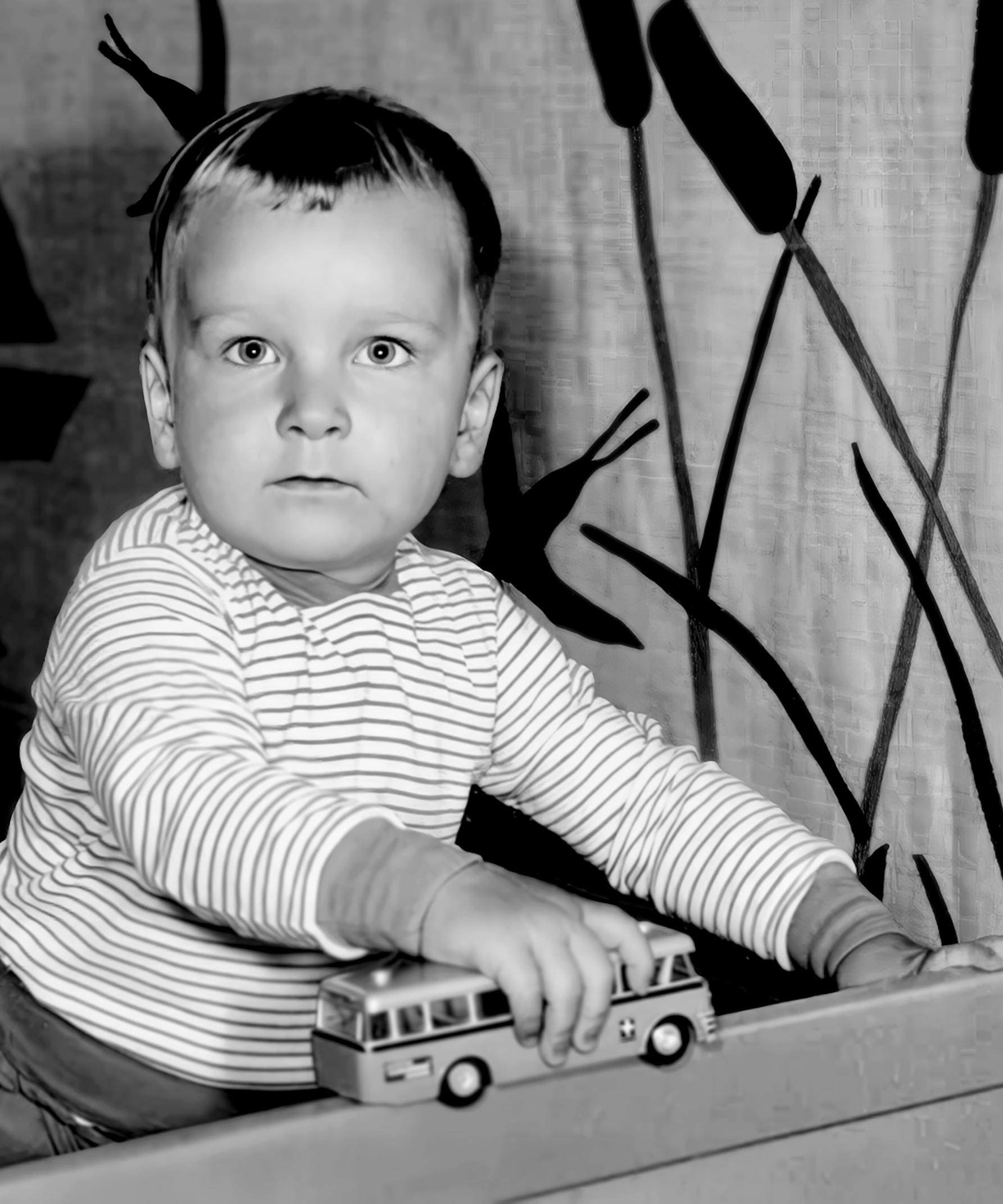
Duerr remembers a sheltered life growing up with his brother. Their mother played the main role in the upbringing of the two children, was always there and looked after them, while their father was often preoccupied by his work. He traveled a lot, and the focus of his life seemed to be his job at Ciba-Geigy. After coming home from work, he needed peace and quiet, which is why Duerr’s friends were usually not welcome. His father often worked late into the night, and time and again, stress at work led to verbal outbursts.
In 1971, a family meeting was held for the first – and last – time. The two boys were summoned to the table and told the bad news – their father was being transferred to England, with Duerr just 13 years old at the time. As Martin Duerr recalls, the question of whether the children should join him was put rather half-heartedly. His mother wanted to stay in Riehen, and his father preferred to experience his new professional adventure alone. This was a difficult time for young Martin. With his mother and younger brother, he now lived without a father in Riehen. The visits, which only took place every few months, were difficult for him, and he avoided contact with his father. As a result, Duerr always felt a sense of loneliness in his youth: “In my teenage years, I essentially grew up without a father,” he says today.
A welcoming home
During this time, Duerr gained an insight into a completely different household. His close school friend Niklaus had a very different relationship with his family: Niklaus’s father Theophil was a parish priest and an open-hearted person. People often visited to ask his advice, and he took a lot of time for his family of six. This was in complete contrast to what Duerr experienced in his own relationship with his father.
“At my friend’s house, it was only natural to invite others into their family life. I always felt welcome.”
Martin Duerr
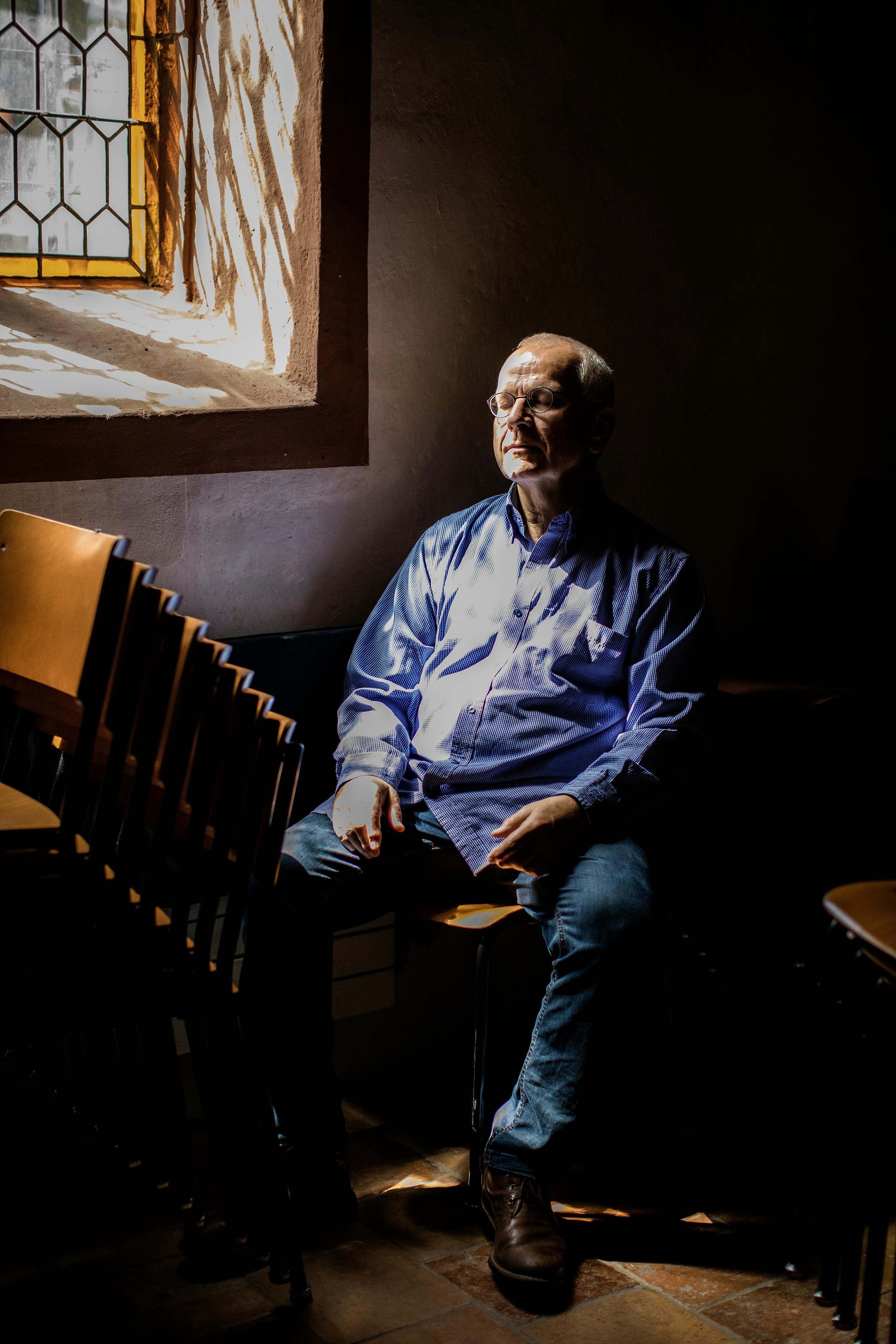
“At my friend’s house, it was only natural to invite others into their family life. I always felt welcome,” recalls Martin Duerr. He was fascinated by his freedom to come and go as he pleased, the laughter shared during meals, and that his friend’s father was ever-present with good advice – it was like being part of a completely different world. The warmth of this home, where a person is seen, heard, and accepted, would later lead Martin to pastoral care.
Childhood faith
After finishing school, Duerr decided to study history and English, aspiring to become a teacher. He believed that teaching would allow him to nurture his social commitment and his passion for educating others. At that time, the idea of becoming a priest never crossed his mind. Although he had lingering questions about religion and wanted to explore the naïve faith of his childhood, he doubted that his beliefs were robust enough for the clerical path.
However, after three semesters at university, Duerr found his motivation for his studies waning. During a period of soul-searching, he pondered what might inspire him more deeply. Questions of faith increasingly dominated his thoughts, and for the first time, he felt drawn towards theology. He recalled the warmth, the sense of community, and of being heard in Niklaus’s home and considered following in the footsteps of Pastor Theophil. His goal was to foster a similar environment – a welcoming home where people are seen, heard, and accepted. He then began to study theology.
Sitting next to a murderer
While many encouraged Duerr to pursue theology, some cautioned him that such studies might lead to a loss of faith. However, as things turned out, studying had the exact opposite effect. He was able to explore his unanswered questions, gain a deeper understanding of various religions and belief systems, and shed his stereotypical notions of the priesthood. His studies reinforced Martin’s faith, solidifying his core belief that “someone” is indeed out there. He finally completed his studies in his mid-twenties. During his training, he was occasionally allowed to conduct marriage ceremonies and funerals. After his studies, he worked as a pastor at a center for paraplegics, at the Werkstaette Basel residential home, and at Lohnhof and Schaellemaetteli pretrial prisons in Basel.
At just 26 years old, taking on such significant roles was a big step for him, but he found joy in talking to and supporting people. At first, Duerr found it hard to come to terms with the patients’ plight he encountered during the day, often reflecting on them in the evening. He had to learn how to deal with the emotional impact of his work. Situations such as sitting side by side on a prison bed with a murderer were part of Duerr’s everyday life at this time. “I was able to learn a lot in an extremely short time,” he recalls. However, looking back, he is now not sure whether he would take this step again at such a young age.
He worked in the three institutions for five years and experienced highs and lows. For Martin Duerr, his job has always been a great privilege: “Being a priest has always been a blessing for me. I get to be there for others. That’s the best thing.”
Nevertheless, this period was also characterized by misfortunes and tragic stories. His most important insight that shaped his approach to life: “At that time, I learned to approach people as openly as possible. Everyone brings their own baggage with them and I don’t have the right to judge them,” he reflects. Although Duerr greatly valued his profession, his desire for collaboration and community continued to grow. In the institutions, he was usually alone and only worked with a small number of people. He remembered his original goal of becoming a parish priest, creating an open house for others and meeting people. He therefore bade farewell to his first job.
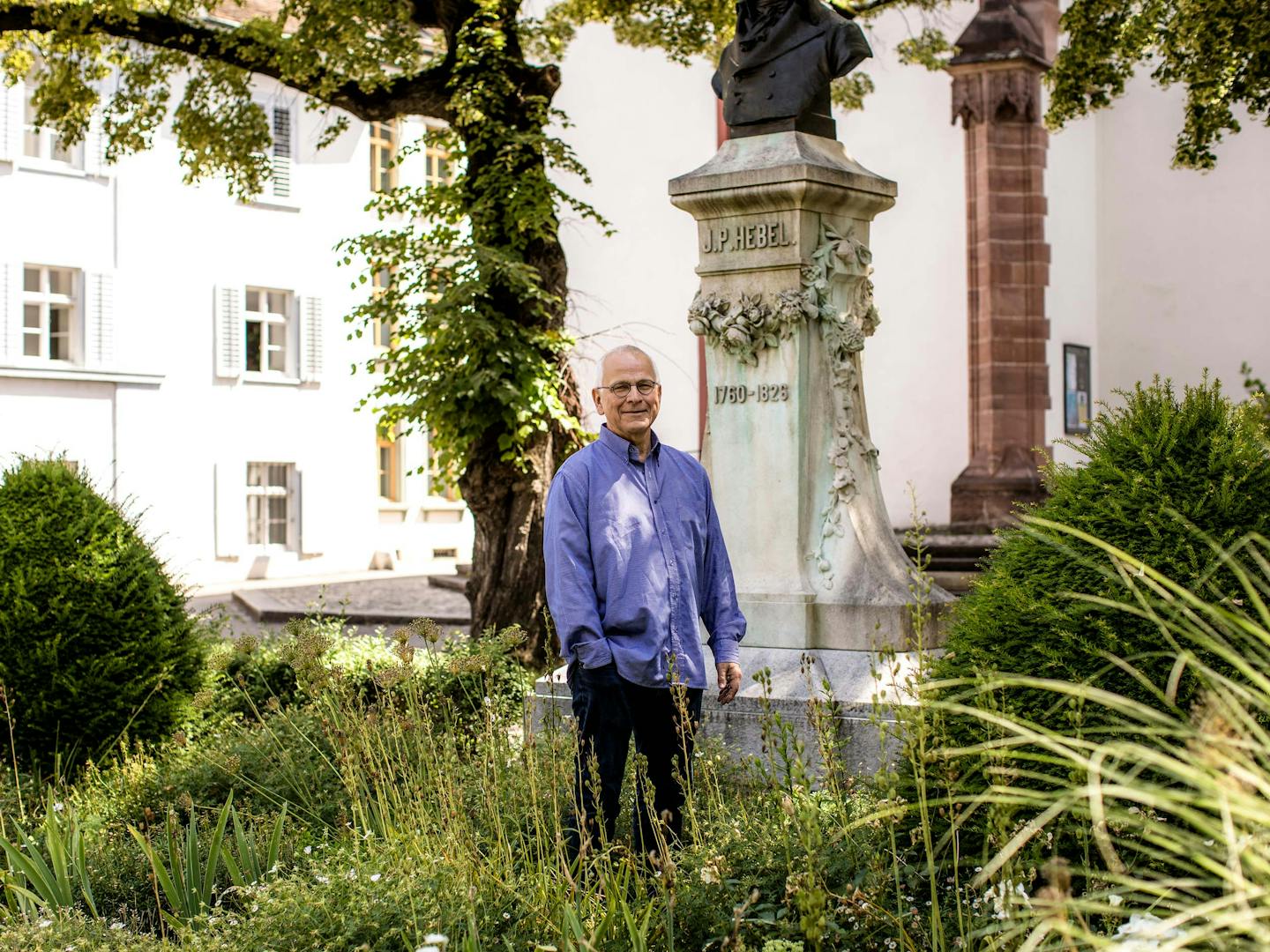
Martin Duerr did not have his own church. But he was welcomed everywhere.
Varied encounters
In a stroke of luck, Martin Duerr became parish priest at Johanneskirche, where he remained for the next 18 years. In contrast to his first position, Duerr no longer approached people himself. Instead, people came to him with different concerns.
The role of priest came with a range of basic duties: confirmation classes, church services, christenings, weddings, and funerals were now part of his daily routine. He taught, worked with young people and families, and met a wide range of people from all walks of life.
“For me, encounters with people and questions about the meaning of life were constant companions. What can religion and spirituality provide for the challenges in my life, and how can they help me cope with them? This aspect was always at the forefront for me,” Duerr explains. He also worked as a care team expert and advisor to employees of Crossair and Swiss during this time. Additionally, he wrote newspaper columns, was a speaker at various institutions, gave radio sermons, and held live services on television. After some time, Duerr longed for a new challenge and more time for projects that were close to his heart.
Duerr becomes an industrial pastor
After 18 years in the parish priesthood, the now 49-year-old was serendipitously guided to his next – and final – position. At a conference, he learned that Martin Stingelin, the industrial pastor at the time, was preparing to retire. For Duerr, becoming an industrial pastor was an absolute dream job. He found nothing more stimulating than building bridges between workers, employers, the unemployed, and the church.
There is only one such position in Switzerland – Martin Duerr seized the opportunity, applied, and was accepted shortly afterwards. From then on, it was his job to create a connection between religion and business. He visited people at work and in their everyday lives. He was mainly concerned with issues relating to business, work, ethics, and religion, and he addressed the topic in conversations, while teaching business ethics, and in courses.
His day-to-day life was diverse and varied, with a strong focus on upholding ethical values in business life. “For me, every person is valuable, no matter their career path, the breaks in life they’ve had, the suffering they’ve endured, or the joy they’ve experienced. It is not my job to decide what is right and what is wrong. I want to provide people with the space they need to find themselves,” Martin Duerr emphasizes when answering the question which values have always been important to him throughout his career. He wanted to offer a listening ear and a space for people – something that he sometimes found lacking in his own life. “I’m one of the lucky ones who ended up in exactly the right place,” Duerr adds with a smile.
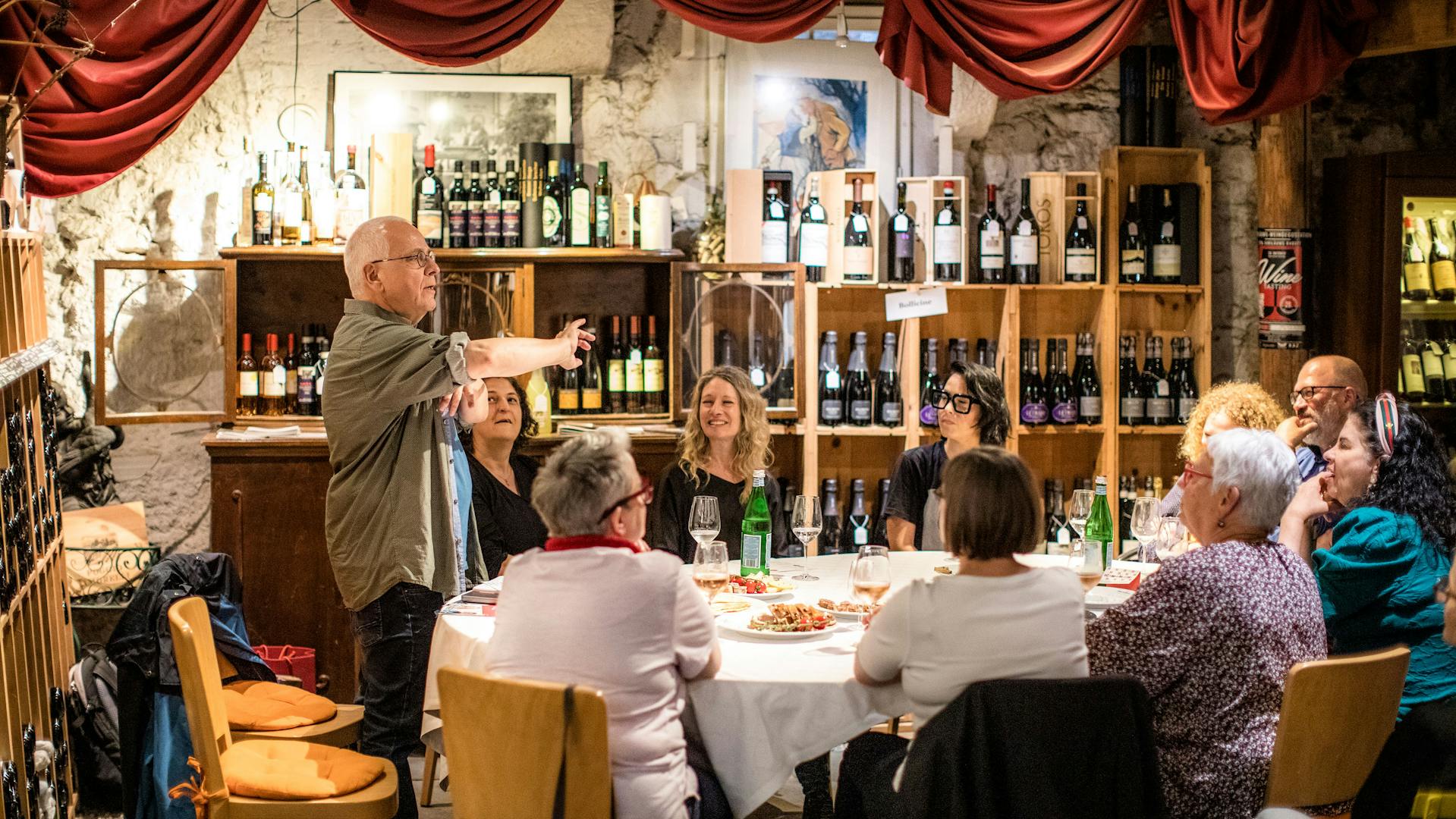
Martin Duerr during one of his most recent dialogue events in Basel.
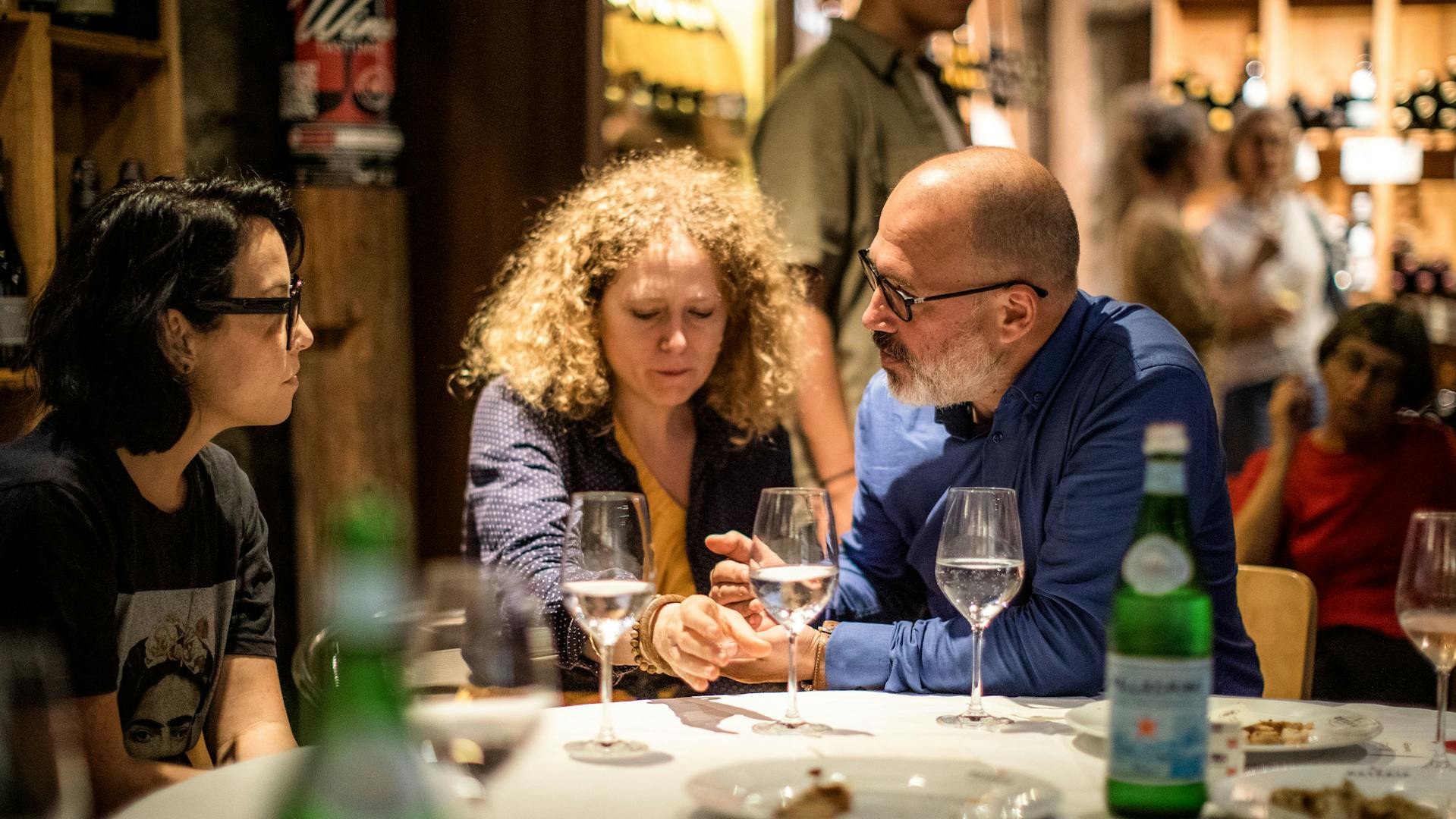
Guests would open up in the intimate atmosphere created by Duerr.
All good things must come to an end
Despite the wide range of duties in his work, Duerr still finds time for projects that are close to his heart. One of these is a series of talks with women that started in May 2023. This project emerged from a conversation with his two daughters, who pointed out to Duerr that it is often more difficult for women than for men to establish professional networks. This prompted Duerr to organize events where he only talks to women and gives them the opportunity to network.
The individuals he talks to vary greatly. Apart from their gender, what they have in common is the fact that they are typically in the early stages of their careers, spanning diverse sectors such as theater, finance, start-ups, IT, and many others. Nine of these meetings have already taken place. More are to follow. Although the office of industrial pastor will be discontinued with Martin Duerr’s retirement in fall of 2024, he still wants to keep his projects running. He intends to continue his series of interviews, writing, and his passionate engagement with social media.
Duerr wants to use his newly gained freedom to have more time both for his personal commitments and for his family, especially his grandchildren. Despite this chapter closing for Martin Duerr, his departure was not a melancholy occasion. On September 12, 2024, Martin Duerr’s time as industrial pastor was celebrated with a gathering of his friends at the Novartis Pavillon.
Entitled Rayonnement de Joie (beams of joy), the event was a thank you for all the encounters and friendships that have developed during Duerr’s time as an industrial pastor. In this way, his unexpected, yet fulfilling journey as a pastor ended as naturally as it began. Today, Duerr knows that he has chosen the right path. In his career and beyond, he was able to do what was always close to his heart – providing others with a home. A home where one can be radically human.