
Published on 28/06/2022
If there are genes for storytelling, Frank Petersen certainly has one of them. The experienced scientist, who has focused on natural products research during his 30-year career, is not a detached storyteller, though. His art consists of breathing life into the often dry and arcane facts of medicine and to present seemingly remote scientific topics in such a way that almost everyone can relate to them.
Listening to him talking, for example, about the ergot fungus and the way he reveals its cultural and historical significance for a broad public, who may only have heard of LSD as a party drug, is hugely enjoyable. No shortage here of humor and intellect after a lecture by Petersen, which leaves you thirsting to delve deeper into science and its significance for our everyday lives.
“I come from a family of doctors,” Petersen said when I met him in late summer on the Novartis Campus. “Medicine was always an issue in our home, but not just in a scientific sense. Medicine and science have always been paired with culture and, above all, with history,” he explained, adding: “To me, listening to my father and his brothers talking about discovering therapies was like listening to an adventure story.”
Even though he ultimately studied biology rather than medicine, completing his doctorate in Tuebingen under the leading Swiss microbiologist and antibiotics researcher Hans Zaehner and entering the pharmaceutical industry in 1991, Petersen never lost his love of storytelling. In addition to numerous scientific articles, he also wrote books and shared his knowledge in a large number of lectures and as a guest professor at various universities around the world.
In addition to his scientific know-how, it was above all his broad cultural knowledge and his communication skills that made him the ideal candidate to lead the Advisory Board. Together with longtime chief architect Marco Serra and Nelly Riggenbach, who heads the Pavillon communications, Petersen put together a group of scientific, cultural and economic experts who will decide upon a broad range of topics that will be discussed here.
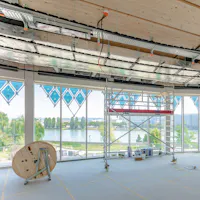

Interdisciplinary team
“For us, it was important to form a team that would cover as many social aspects as possible so that the Pavillon isn’t detached from social reality, doesn’t just reflect the inner view of Novartis and doesn’t ignore or simply miss out on current events or major social trends,” explained Petersen. “To do this, we were looking for people from a wide range of areas of society: culture, communications, science and business.”
In addition to Botond Roska from the Institute of Molecular and Clinical Ophthalmology Basel, and Dirk Schuebeler from the Friedrich Miescher Institute, philosopher Julia Wentzlaff-Eggebert and innovation and management expert Eva Pauline Bossow will also sit on the Board. Other members of the Board include Gerd Folkers from the Swiss Federal Institute of Technology, exhibition expert Hortensia von Roda of the Sturzenegger Foundation and Marcel Tanner, the former Head of the Swiss Tropical and Public Health Institute. Last but not least, Martin Daetwyler from the Chamber of Commerce of both Basel will join the Board.
“I have many ties with Novartis: through collaboration and personal friendships,” said Marcel Tanner when I met him during an event in the fall of 2021 to quiz him about his motivation for getting involved with the Novartis Pavillon. “For example, I was there when Novartis set up its Institute for Tropical Diseases in Singapore in 2001 and, like many people in Basel and Switzerland, I always kept a close eye on the development of the company. So, it was easy for me to accept the invitation.”
Hortensia von Roda, who has extensive exhibition experience and is well connected in the Swiss cultural scene, readily joined the interdisciplinary team, as she is happy to share her experience with the committee. “Of course, it’s still difficult to predict how the Pavillon will fit into the fabric of Basel’s cultural landscape. But it’s unique in terms of content and direction since it reflects Basel’s living industrial culture.”
Participation
It goes without saying for Petersen that the Pavillon is not about product marketing, but above all about dialogue with the public. And there is no intention to beat about the bush here: “There should be room for difficult topics, which people may have preferred not to address publicly in the past,” said Petersen. “Today, we live in an age when society demands not only transparency and responsibility from companies, but also participation and dialogue. The Pavillon represents this development.”
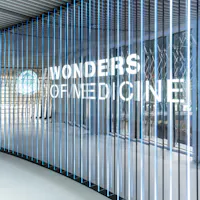
While the Pavillon will also be used by Novartis employees for events and discussion rounds, the Advisory Board initially plans to organize four events per year. Following the official opening, the initial events will focus on thematic cornerstones that are also covered in the Wonders of Medicine exhibition, ranging from topics such as illness and innovation to the social consequences of new technologies such as gene therapy.

Focus on people
“The Pavillon has two important functions,” explains Riggenbach. “On the one hand, we want to introduce the pharmaceutical industry as such to the public with the help of the exhibition. But this alone would not be enough. We want to enter into real dialogue with the public and inspire others for our work. This includes the exhibition on the upper floor, the School Hub on the ground floor, which is part of our expanded school laboratory, and of course the events, which we will adapt to the needs of individual target groups.”
“We hope that the Pavillon will enrich cultural life in Basel,” says Riggenbach. “The pharmaceutical industry should not just be perceived as a big industrial sector and as a potential employer, but as an important, vibrant and future-shaping part of the city.”
This is likely to accelerate with the planned opening of the Novartis Campus later this year. The area, which is often dubbed a “forbidden city,” will open its doors and be accessible to the public, which is likely to change the popular view in Basel, where the company until now tended to be perceived as a closed corporation.
Julia Wentzlaff-Eggebert, who, like many Basel residents, knows Novartis only from a distance and through the lens of the media, also believes this to be the case. The fact that she will be able to participate in the selection of topics as a member of the Advisory Board pleases her not only as a philosopher looking for ways to bring her theoretical thinking to society. She also sees this development as the materialization of an idea or even an ideal. For Wentzlaff-Eggebert, however, it will be exciting to see if the diverse Board finds common ground. “Sometimes we talk about the same things, but don’t mean the same things, especially when arts scholars and scientists come together,” she adds.
While misunderstandings can never be ruled out, the Board should make good progress if people exchange views in a spirit of openness and strive to find solutions. Wentzlaff-Eggebert sees strong signs for such a development. “The fact that Novartis is open to society at all and allows other voices to have their say, clearly shows that the company is not only concerned with scientific research, but also with placing more emphasis on people. This points to greater change.”

Thanks for reading Live.Magazine
Stay connected by subscribing to our newsletter
SubscribeBy submitting your email, you consent to Novartis AG collecting and processing your email data for Novartis internal use, in accordance with our privacy policy, and by protected technical means.