Live. Magazine

A woman at the museum night at the Novartis Pavillon.

Travels in medicine
A meeting place for science.

Lifting the curtain on science and medicine

Since the opening of the Novartis Pavillon in 2022, more than a dozen public events have taken place as part of the Behind the Science lecture series. Designed as a public forum, much like the Novartis Lectures that have been a biannual fixture in the Gehry auditorium since 2012, the goal is to spread scientific unders­tanding and deepen the public debate around relevant research projects and medical practices. The following are some of the highlights which have attracted hundreds of visitors from Basel and beyond.

Text by Louisa Reissner, photos by Adriano A. Biondo and Martin Oeggerli.

Mathematics curiosities and pie

Philipp Habegger, professor of number theory at the University of Basel, took the audience on a captivating journey into the world of mathematics on Pi(e) Day, which takes place on March 14 every year, alluding to the first numbers of pi, 3.14…

Portrait Philipp Habegger.
Presentation slide showing the number pi.
Audience members during the museum night at the Novartis Pavillon.
Baked goods with the letter "pi" on it.

Philipp Habegger
Professor of number theory at the University of Basel

In awe of architecture

During one of the Novartis Lectures in 2023, neuroscientist Colin Ellard explored how architecture can stir emotions – something that is becoming increasingly important as companies around the world struggle to attract people to the workplace.

Portrait Colin Ellard.
Neuroscientist Colin Ellard during his talk.
Audience during Colin Ellards speech.

Colin Ellard
Neuroscientist

Restoring vision

Botond Roska from the Institute of Molecular and Clinical Ophthalmology Basel (IOB) held an eye-opening talk on the groundbreaking research done at the IOB, which was only created in 2017 and already has its first genetic therapy ready for human trials.

Botond Roska from the Institute of Molecular and Clinical Ophthalmology Basel (IOB) during his talk.
Audience during speech of Botond Roska from the Institute of Molecular and Clinical Ophthalmology Basel (IOB).

Nobel Prize series

Led by Gerd Folkers, professor emeritus of pharmaceutical chemistry at ETH Zurich and member of the Novartis Pavillon Advisory Board, experts from academia and industry explored the scientific breakthroughs and social significance of the 2022 and 2023 Nobel Prizes.

Nobel Prize certificate and tea service on display.
Member of the Novartis Pavillon Advisory Board speaks about Nobel Prizes.
Nobel Prize medal engraved with the name Paul Müller.

Molecules in medicine

Martin Missbach, Head of Medicinal Chemistry at Novartis, took a dive into the fascinating intersection of molecules and medicine, explaining how molecular properties enable effective therapeutic actions.

Martin Missbach giving a presentation on molecules in medicine.
Portrait of Martin Missbach with members of the board.

Night out

Several thousand locals and tourists from afar have visited the Pavillon as part of the Industry and Museum Nights in Basel in the last two years, which has helped attract new audiences to this unique industry exhibition and learning space.

Two children dressed up as scientists at the museum night in the Novartis Pavillon.
Visitors looking at light sculptures during the museum night in the Novartis Pavillon.
Woman touching a Van-de-Graaff-Generator that makes her hair fly during the museum night in the Novartis Pavillon.
Visitors during the museum night in the Novartis Pavillon.

Palliative care for children

Dr. Kathrin Hauri and nurse Jacqueline Tanner shared heartfelt stories from their work at the University Children’s Hospital Basel, illustrating the joys and challenges faced by children and their families in palliative care settings.

Mother with her two children wtaching a video installation during museum night at the Novartis Pavillon.

70 years since the discovery of DNA

Dirk Schuebeler, director of the Friedrich Miescher Institute, revealed fascinating insights into our genetic makeup and discussed the role our 46 chromosomes might play in healthcare in the years ahead as gene therapies become more widely used.

Dirk Schuebeler, director of the Friedrich Miescher Institute during his talk about DNA.
Audience during Dirk Schuebelers talk about DNA.
Visitors looking at a double helix sculpure brought to life by augmented reality.

The long-lasting impact of LSD

Prof. Dr. Matthias Emanuel Liechti and Novartis scientist Dr. Frank Petersen, along with Pavillon Advisory Board member Julia Wentzlaff, discussed the profound impact of LSD on the pharmaceutical sciences and medicine since its discovery 80 years ago.

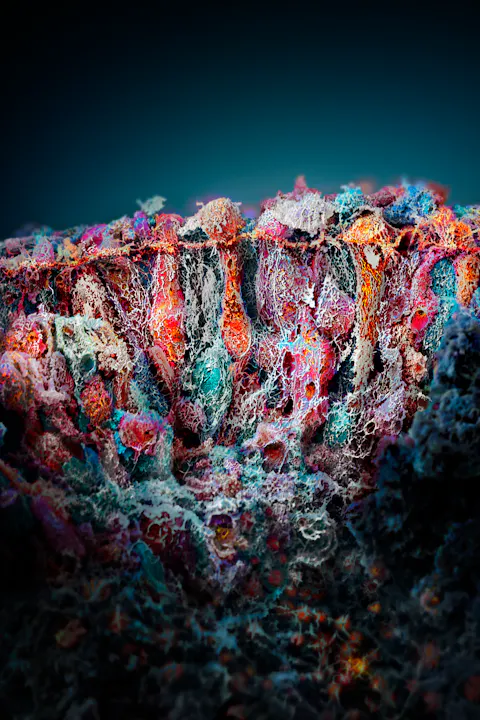
Ergot mushroom through the microscope.

Ergot mushroom (Claviceps purpurea). This fungus infects the ears of rye and related cereal plants with its spores. Ergot contains ergotamine, which is used to synthesize lysergic acid, an analogue of and precursor for the synthesis of LSD, which today is used for clinical trials again.