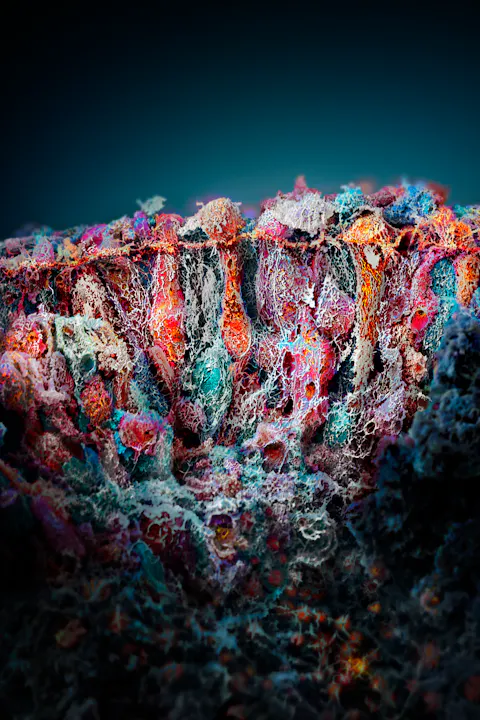
Whether Albert Hofmann was a modern mystic who by chance happened to work for Sandoz’s research unit during the mid-20th century or whether his later scientific discoveries just reminded him of a quasi-religious incident in his childhood may be a question that his biographers will ultimately answer. What is evident though is that during his early years Hofmann experienced what many would describe as an awakening: “I no longer recall the year,” he writes in his essay The Transmitter-Receiver Model of Reality, “but I can still specify the precise spot, the exact place where it happened on the Martinsberg forest path above Baden.” He was walking through the forest when, “suddenly everything appeared in an uncommonly clear light. Had I previously not observed carefully, and did I suddenly now see the spring forest as it really was? It radiated in the splendor of a peculiar, heartfelt beauty, as if it wished to encompass me in all its glory.” Hofmann had many such episodes throughout his childhood and youth. But he had no words to describe what he saw and felt. He struggled to make sense of it, which inspired him with a lifelong curiosity that he tried to still by becoming a chemist “to attain insight into the structure and essence of matter,” as he wrote in the introduction to his book LSD My Problem Child. Such ideas may not have been discussed when Hofmann applied to join Sandoz in 1929 and started work under Arthur Stoll who a few years earlier had set up a small research unit to focus on natural products research, most notably on ergot, a parasitic fungus that infects cereal grains like rye. Hofmann’s early research focused on studying the active principles of the Mediterranean squill, a flowering plant native to Southern Europe and the Middle East. There, he helped elucidate the chemical structure of the active, sugar-containing glycosides, which were used in treating cardiovascular diseases, where Sandoz also discovered a treatment based on woolly foxglove. After a few years tinkering with squills and foxglove, Hofmann wanted to switch fields. He asked Stoll to resume the ergot-based research, which had allowed Sandoz to launch its first self-developed drug.
A rare shot of Albert Hofman in his younger years.
The company had been among the leaders in this domain but risked losing the advantage Hofmann feared. Stoll, although only grudgingly – because of the unstable properties of ergot derivatives as well as the expensive production process – allowed Hofmann to proceed. For the rest of his life, Stoll would have mixed feelings about this management decision. Fruitful discovery Hofmann’s research started harmlessly, however, as he initially looked to develop an ergot-derived circulatory and respiratory stimulant. Hofmann based his idea on the fact that Sandoz already had an analeptic on the market with similar chemical structure. By the time Hofmann tested what would be known as LSD-25 – the 25th sample in his test series – he and his colleagues were able to detect that the molecule had a strong uterotonic effect. But since its activity was below that of an existing medicine, further trials were discontinued. This was in 1938. LSD-25 was stowed away for the next five years and Hofmann worked on other ergot-derived molecules. This work resulted in the development of Hydergine® for the treatment of age-related cognitive and cerebrovascular disorders, blood pressure drug Dihydergot® and Methergine®, a uterotonic agent. The business success – Hydergine was among the company’s best-selling drugs at the time – did not weaken his wish to continue working on LSD-25. Although the molecule’s efficiency was questionable in uterine settings, Hofmann and his colleagues had noted that the animals were “restless” during the trials.
Excerpt from Hofmann's laboratory notebook.
This seemingly fleeting observation might have served as a hint that there is more to the molecule. But whatever the ultimate reasons – Hofmann later wrote that he had a “peculiar sentiment” about this substance – he resumed his studies in 1943 and repeated the synthesis of LSD-25 with the goal to produce a few centigrams for further testing. During the final step of the synthesis, he felt an uncommon sensation and was forced to stop his work and go home. “I lay down and sank into a not unpleasant, intoxicated-like condition, characterized by an extremely stimulated imagination... [experiencing] an uninterrupted stream of fantastic picture,” he wrote in a five-page report to Stoll. Hofmann struggled to explain the effect. He had worked meticulously during the synthesis process. The last step entailed the creation of LSD in salt form. “May he have absorbed the salt crystals through his skin”, he asked himself. Hofmann answered the question with a self-experiment a few days later. Bicycle day The self-experiment has gone down in history as the Bicycle Day ride, which is celebrated every year on April 19. After taking, at exactly 4:20 p.m., “0.5 cc of ½ pro mille aqueous solution of diethylamide tartrate orally... taken diluted with about 10 cc water,” set off on his bicycle. By 5:00 p.m., he began to feel dizzy and was overcome by an urge to laugh. “I asked my laboratory assistant, who had been informed of my self-experiment, to escort me home”, he wrote later. “We went by bicycle, no automobile being available because of wartime restrictions on their use. On the way home, my condition began to assume threatening forms. Everything in my field of vision wavered and was distorted as if seen in a fun-house mirror. I also had the sensation of being unable to move from the spot.” As the effect of LSD worked on Hofmann, his state worsened. The images became increasingly frightening. It seemed as if a demon had started to take possession of him and he feared to go insane. His assistant called for a doctor, who, however, was unable to detect any suspicious symptoms. Hofmann recovered a few hours later when he was overwhelmed by “a feeling of great fortune and immense gratitude... little by little, I could begin to enjoy the unprecedented colors and plays of shapes that persisted behind my closed eyes.” The next morning, he would wake up invigorated with a “renewed sense of life.” What happened? During the time of Hofmann’s discovery, drug research was still very much in its infancy. Although chemists were working at the forefront of science, it was not uncommon for them to test molecules on themselves to better understand their effects. This was true for LSD-25 and many of the other drugs developed in the early 20th century, as researchers did not yet have the means to fully fathom a molecule’s mechanism of action.
But LSD was different in another sense. Hofmann used such a small amount – a fraction of a milligram – that his bosses wondered whether he had weighed the sample correctly. A diligent scientist, Hofmann understood their doubts given that similar hallucinogenic drugs would be administered at much higher doses. To verify his results, the head of Sandoz’s pharmacological department, Emil Rothlin, and two of his colleagues repeated the self-experiment. They went through a similar fantastic experience, leaving them baffled as to how this was possible at all. What followed were years of experimentation, in which Hofmann and his colleagues developed additional ergot derivatives to shed light on LSD and understand more about the molecule’s properties and its biological interactions, even leading to the development of a migraine drug. Separate studies in the U.K. were also instrumental in elucidating the extraordinary effect of the molecule. Finding that LSD had serotonin-blocking properties, these studies carved a fresh avenue into the neurosciences and allowed for a reinterpretation of psychiatric diseases. Researchers slowly came to understand that mental illnesses may be due to biochemical dysregulation. It was a major leap that almost went unnoticed amid the ensuing cultural revolution triggered by the drug. By 1947, LSD was also tested for the first time at the psychiatric clinic at the University of Zurich by Werner A. Stoll, the son of Arthur Stoll, administering it to schizophrenic patients. The results were far-reaching: Stoll, who tested the drug on himself, suggested that LSD could be safely used in a variety of psychiatric settings. As the understanding of the molecule increased, although its mechanism of action would only be fully uncovered decades later, Sandoz decided to make it available for research under the trade name Delysid® to treat patients, among others, “in analytical psychotherapy, to elicit release of repressed material and provide mental relaxation, particularly in anxiety states and obsessional neuroses,” as detailed in the prospectus. Clinical research would be conducted during much of the 1950s. But the scientific dynamic would start to shift as rapidly rising popular interest into LSD’s mind-altering qualities and potent hallucinogenic effect ushered in what would become an unsettling cultural phenomenon, upending much of its medical journey. Flower power By 1971, when John Lennon was asked by TV host Dick Cavett whether he had been on LSD when he wrote Lucy in the Sky with Diamonds, the ex-Beatle said that no drugs were involved. Whether true or not – most likely not – the damage had already been done. The song had become the unofficial LSD hymn as the pills were often referred to as Lucy or acid. Illegal LSD labs mushroomed around the world and millions of people threw trips and were consuming the drug as a consciousness-expanding recreational inebriant and aphrodisiac.
Clinical investigations became sidelined more and more. Worse, LSD was considered a societal danger. It led Sandoz to publicly announce that it would stop all production and distribution of LSD in 1965, shortly before the experimental compound was prohibited in the U.K., the U.S., Switzerland and other countries. Much of the popular appeal of LSD and its promise to reach otherworldly experiences was due to the marketing genius and rock-star aura of former Harvard researchers Timothy Leary and his fellow lecturer Richard Alpert, who later gained fame as a guru under the name Ram Dass. While Leary’s and Alpert’s initial interest was purely academic, their experimentations would soon disintegrate into wild parties, where LSD trips offered participants not only a way to experience the divine and discover the self, but enhance their sex lives too. Their Harvard seminars would catch fire and find followers across other university campuses and leave a mark on everyday culture. Leary’s “turn on, tune in, drop out” mantra struck a chord with the rising hippie movement, which sought to break free from the shackles of an uptight bourgeois society. LSD was the highway on which to achieve this goal.
In 1963, Leary connected with Hofmann and tried to order around 1 million doses of LSD from Sandoz. But after Leary failed to produce the necessary import license, Sandoz became suspicious and canceled the order. Soon after, Leary and Alpert were fired from Harvard, adding to their status of revolutionaries. In tandem with the rising hippie movement, LSD consumption gained momentum, whereas scientific investigation into the molecule’s potential as a psychopharmacological medicine came to a halt as a plethora of sensational media stories coupled with fears over LSD’s little understood mechanism stifled professional interest and led to its criminalization. With the road toward clinical research blocked, LSD’s cultural influence, however, advanced with unstoppable speed. Art inspired by its hallucinogenic effect became popular and musicians would boast about how their songs gained new depths under its influence, giving rise to psychedelic rock. Books, articles, poems, paintings, and even photography – everything seemed to breathe the mind-altering promise of LSD, shattering old aesthetics and blasting old ways of thinking. Rather than transforming medicine, as hoped by Hofmann, LSD revolutionized Western culture with ripples still being felt today as artworks, plays and films keep exploring the phenomenon. A silent revolution in neuroscience While Sandoz tried everything to distance itself from the massive fallout stemming from the rampant drug abuse, Stoll, who early on was reluctant to allow Hofmann to work with his precious material, was deeply disappointed: “I would rather you had never discovered LSD,” he told Hofmann, whose discovery turned from promise to “problem child” within a few years. In the shadow of the cultural and corporate upheaval caused by LSD, researchers, however, started to realize that its properties were helping scientists to deepen their understanding of the brain. At the time, the brain was mainly seen as an electrically wired machine while the role of chemistry in the brain was considered negligible. This changed after British pharmacologist John Gaddum and Canadian biochemist Dilworth Wayne Woolley started to unveil the serotonin-blocking properties of LSD. Gaddum wrote that “it is possible that the serotonin in our brains plays an essential part in keeping us sane and that the effect of LSD is due to its inhibitory action on serotonin in the brain.”
John Gaddum.
The idea was revolutionary since the reigning theory of the brain considered it more from a structural point of view. Leading scientists like John Eccles were also convinced that neurons communicated primarily through electrical signals. Gaddum and Wolley, however, showed that the role of neurotransmitters was much more important than previously believed. Their findings did not just change the understanding of the brain. It triggered the development of new medicines to treat psychiatric diseases which before the discovery of LSD were approached mostly with the help of psychoanalysis and explained by environmental factors. Fast medical progress While Sandoz and Hofmann fought against the reputational fallout of the abusive use of LSD, the scientific findings triggered a new research frenzy in the neuroscience space with Sandoz, Ciba and Geigy developing new treatments against psychotic symptoms, Parkinson’s disease and depression, among others, establishing themselves among the leaders in the field. With the merger of Novartis, the company continued these efforts and also started to focus increasingly on neurodegenerative disorders and neuroinflammation, bringing breakthroughs to the market in areas such as multiple sclerosis, Alzheimer's and migraine, among others.
Also, Novartis was among the first companies in the world to launch a gene therapy for a rare neuromuscular condition, reflecting its ambition to drive cutting-edge scientific progress both in terms of identifying new targets and leveraging innovate technologies to break new ground for patients, continuing a movement that started almost a century ago with a chance finding that changed medicine for good. It is in this tradition that Novartis is pioneering new approaches today that have the potential to change entire fields of medicine and science and benefit millions of patients worldwide.
You may also be interested in the following:

Thanks for reading Live.Magazine
Stay connected by subscribing to our newsletter
SubscribeBy submitting your email, you consent to Novartis AG collecting and processing your email data for Novartis internal use, in accordance with our privacy policy, and by protected technical means.