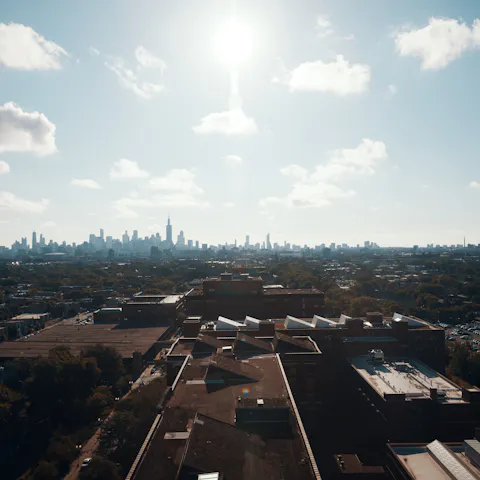
Chicago’s elevated train line, which locals call the “L”, is a tourist hotspot, attracting thousands of visitors every day as its silver bullet coaches circle around the city’s shiny downtown with its impressive skyscrapers, lush parks, and splendid shops. But just seven stops down the blue line to the west, the city shows a different face: higher levels of poverty and one of the lowest life expectancies across the United States, with a 16-year difference from downtown Chicago, where people can expect to live 85 years on average.
To change this situation, which has been smoldering for decades, David Ansell from Rush University System for Health has partnered with others to carve out a path that could bring lasting change to this district and to underserved regions in the United States as a whole. Together with community, academic, and business partners, Ansell has launched a series of programs and business ventures and has set up a hospital laundry service aimed at closing what he calls the death gap. This also includes program E3 (Engage, Empower, Evaluate), which is sponsored by Novartis and aims at improving heart health in the city.
The goal of Ansell, who was Rush’s chief medical officer for more than a decade, is not to improve the medical profession per se, but to imbue medicine with a social component and rip down the structural barriers that keep millions from achieving positive health outcomes. To get a better understanding of this approach, we followed Ansell, who now serves as Rush’s vice president of community health equity, and his team in Chicago to see how they are turning social medicine into a reality. During our journey, we met with clinical social workers such as Therese Byrne from Rush as well as community health workers Quintonele Allen and Jasmine Martinez. We learned about the life of heart patients such as Michael Williams and Lula Jordan and met shooting victim Marcus Kelley, who opened his doors to tell us about his tragic experience.
We visited the Fillmore Linen Service and business incubator West Side United, and enjoyed Chicago’s vista from the original Sears Tower, the once throbbing economic heart of the city. We also watched a local baseball game organized by the city police and were able to see how many people in Chicago’s West Side depend on Rush’s food distribution program. Finally, we talked to Binta Beard from the Novartis U.S. Foundation and Social Impact, to share her view. To continue reading the feature, click on story number 1. in the map below.
Explore the full Chicago Story Series Health System Strengthening
You are here Prologue: Seven stops down the blue line A journey in space and time.
Read next 1. The two towers Rising towers, sinking fortunes. → Read the story
2. Seeing potential Chicago through the eyes of an economic developer. → Read the story
3. A near fatal gunshot Marcus Kelley’s life change in an instant. → Read the story
4. I am them Empathy offers a way out of the crisis. → Read the story
5. More than baseball Community at its best. → Listen to the story
6. Social medicine Healthcare starts with the economy. → Read the story
7. A collaboration Data can save lives. → Read the story
8. Night out The re-emergence of Guitar Mike. → Read the story
Epilogue: A note of success E3 is set to change Chicago. → Read the story
You may also be interested in the following:

Thanks for reading Live.Magazine
Stay connected by subscribing to our newsletter
SubscribeBy submitting your email, you consent to Novartis AG collecting and processing your email data for Novartis internal use, in accordance with our privacy policy, and by protected technical means.